Multi-Station Transfer Machines
 Previous
 Next
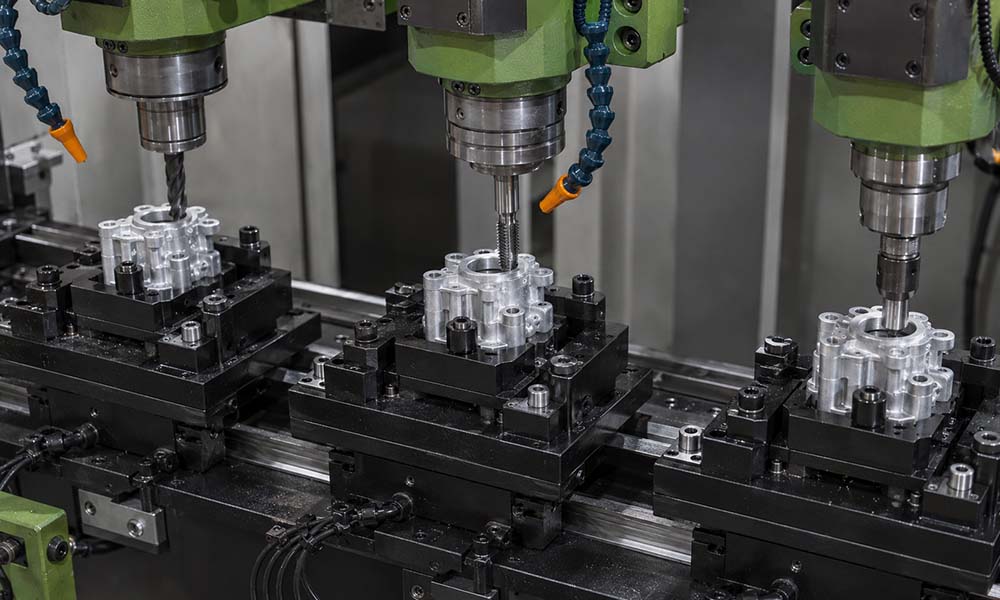
Multi-station transfer machines integrate several machining units into one coordinated production system. Workpieces move through a sequence of stations, with each station performing a dedicated operation such as drilling, tapping, reaming, boring, milling, facing, or dimensional inspection.
Compared with completing every process on one general-purpose machine, a multi-station configuration distributes the machining workload across individual stations. This approach is suitable for repeatable component production where machining sequence, station balance, positioning consistency, and cycle time are important.
HANN KUEN spindle heads, power heads, assembly units, and servo or hydraulic slide units can be configured as independent machining modules. Different modules can be installed horizontally, vertically, or from multiple directions according to the geometry of the workpiece and the location of the features being machined.
When planning a multi-station transfer machine, it is necessary to evaluate the process sequence, cutting time at each station, workpiece transfer method, fixture positioning, tool access, feed travel, spindle capacity, and available installation space. A properly matched modular configuration helps machine builders create an efficient and maintainable production system.
Follow Us
Please add my ID to follow.
hardytw